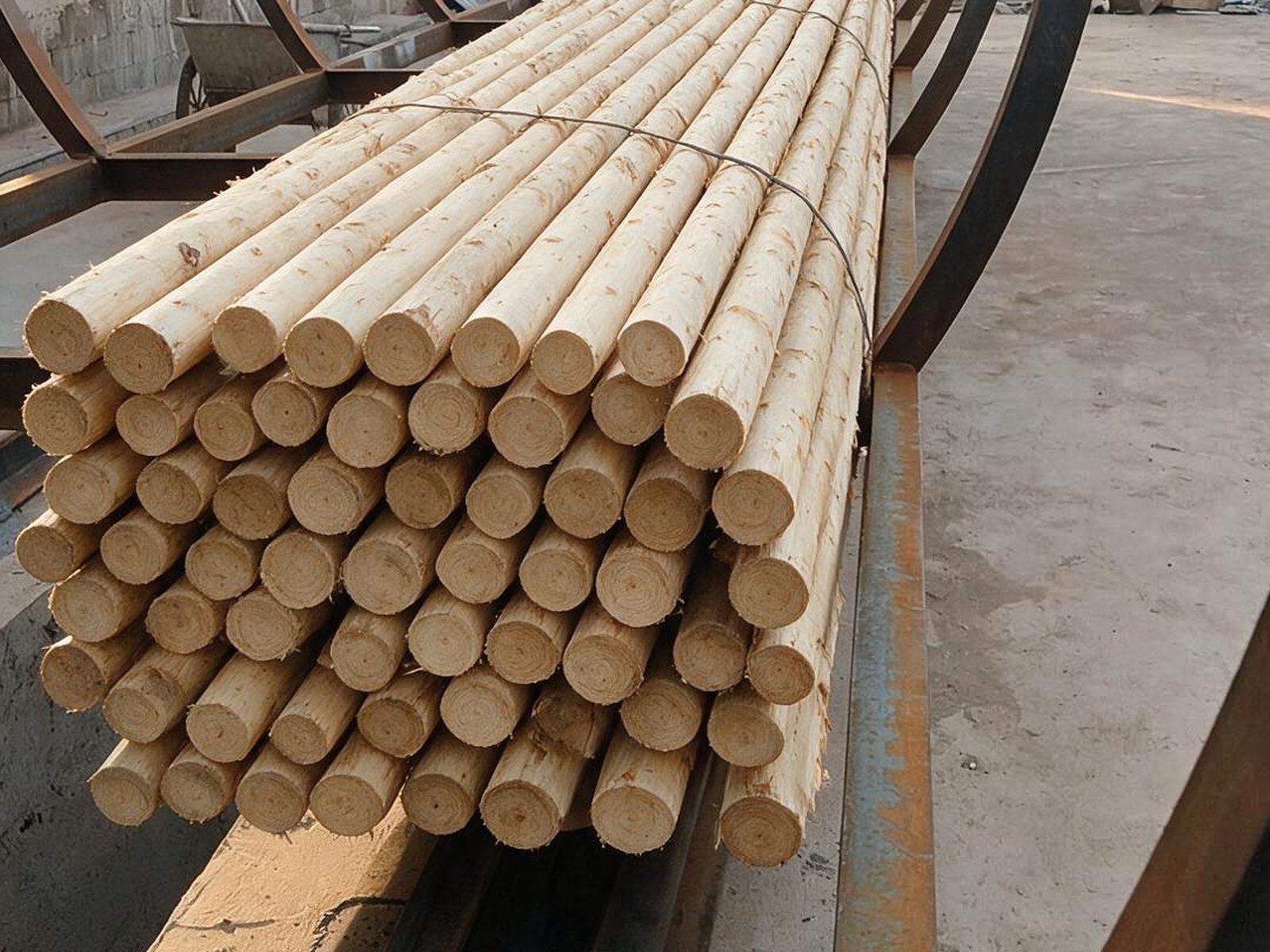
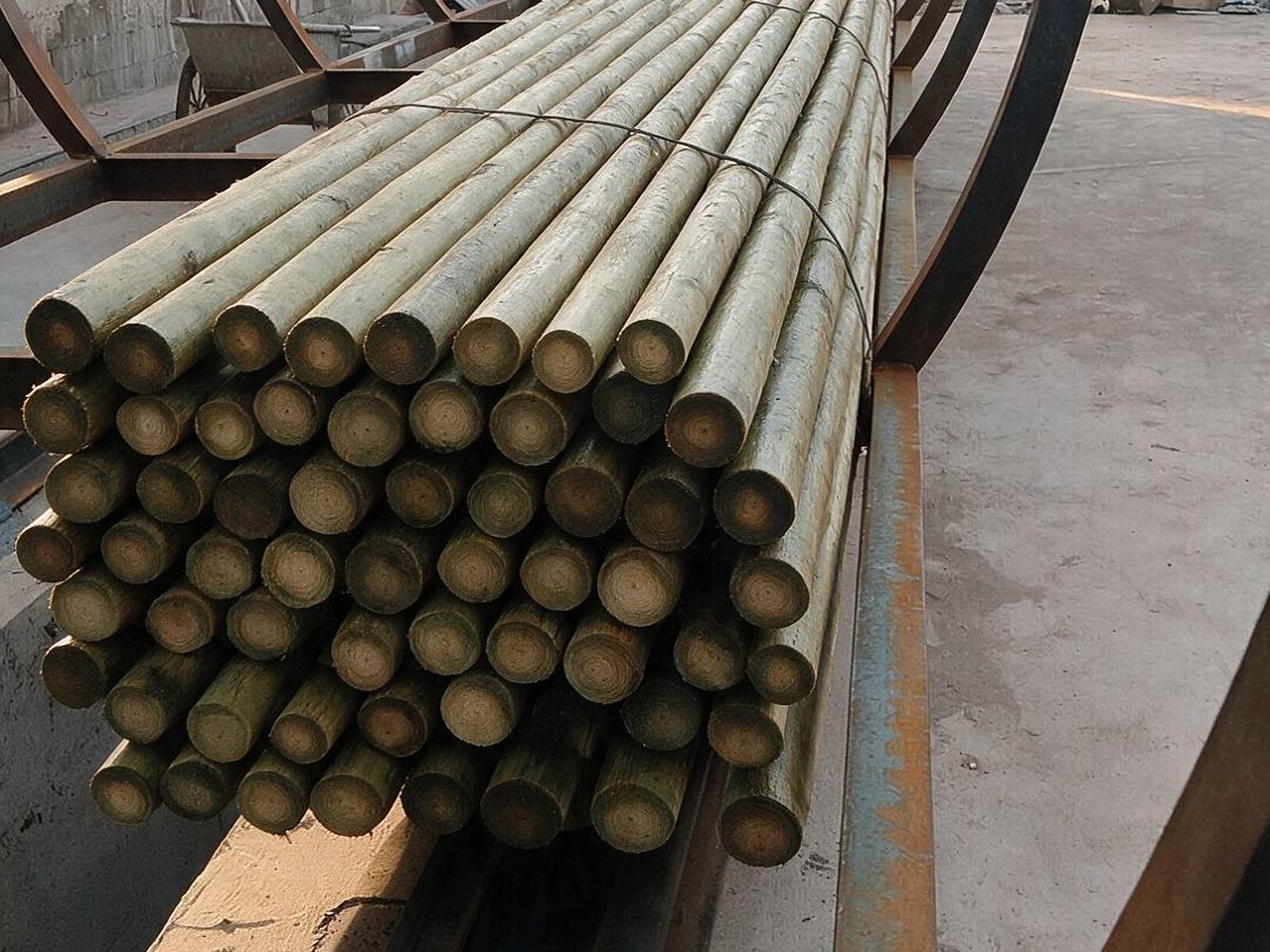
Treated wood poles. Made in Luanda.

ACQ vacuum-pressure treatment for wood utility poles and timber.

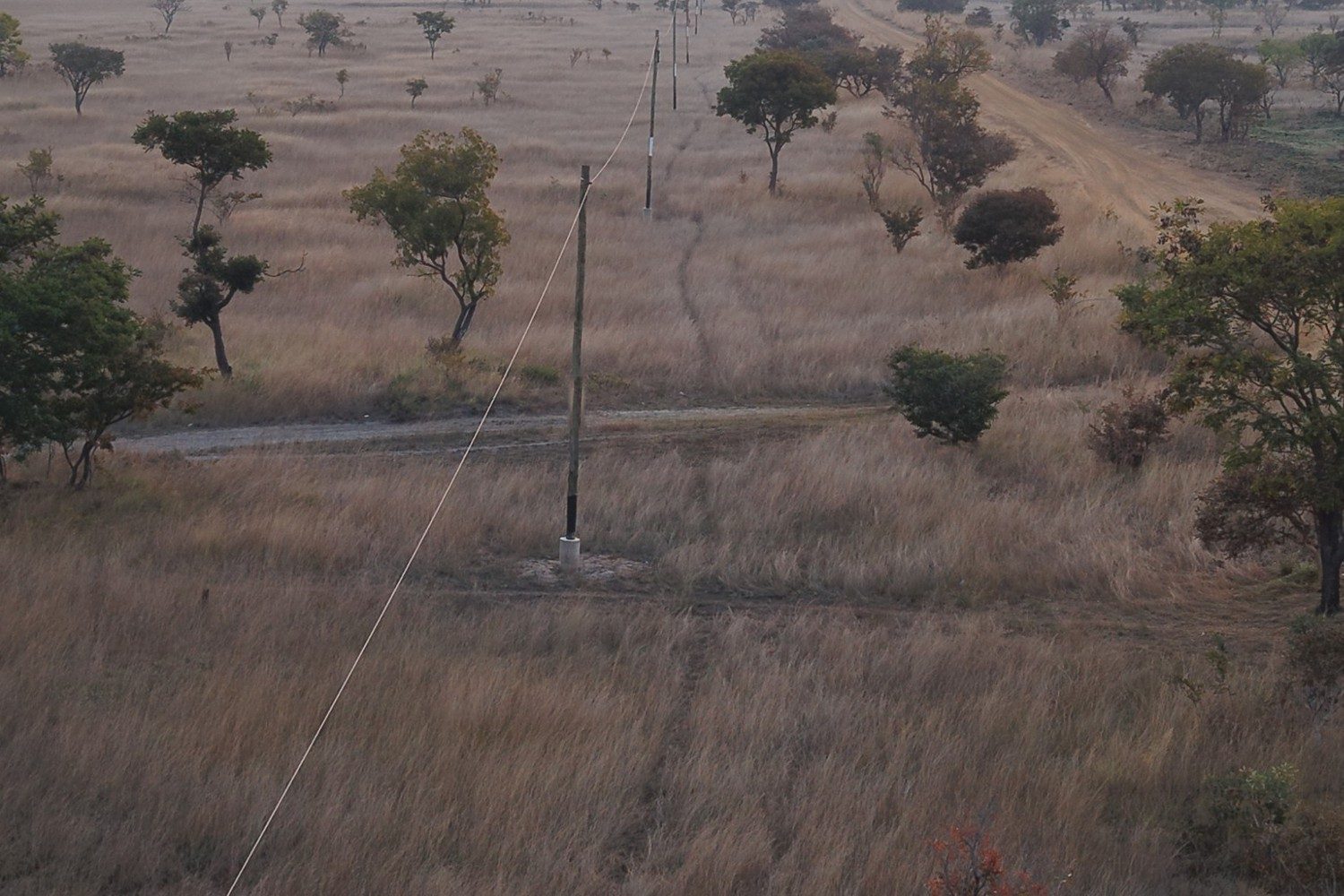
Round treated timber poles carrying a telecom line

Products

8 m wood poles

ACQ vacuum-pressure treatment.

Supplied to order. Typical uses: urban and campus telecom and distribution lines; design span 35–40 m in urban areas (GB 51158-2015).


9 m wood poles

ACQ vacuum-pressure treatment.

Typical uses: suburban and roadside telecom and distribution lines; design span 45–50 m, up to 50–60 m in open light-load areas (GB 51158-2015, YD 5148).

12 m wood poles

ACQ vacuum-pressure treatment.

Typical uses: road, river and railway crossings, long spans and multi-level attachments where extra clearance is required.

Treated timber

Length: contact us for details.

ACQ vacuum-pressure treatment.

Typical uses: fencing and agricultural timber structures.

Pole dimensions and classes

  • Timber: Eucalyptus grandis, Eucalyptus saligna and their hybrids.
  • Lengths: 9 m and 12 m as standard; 8 m to order.
  • Top-diameter classes to SANS 754: 140–159, 160–179, 180–199 and 200–219 mm, measured at the top end. The class is chosen from the line design.
  • Ground-line diameter follows from length, class and taper and is confirmed per order.
  • Poles are supplied debarked, with both ends nail-plated against splitting.
Reference specification: 8 m pole (SANS 754, hazard class H4)
Minimum diameter at ground line (1.5 m from butt)172.5 mm
Diameter at top140–159 mm
Minimum diameter at midpoint160 mm
Cantilever load5.37 kN
Midpoint load13.69 kN
Strength class (average fibre stress)63 MPa
Modulus of elasticity11 000 MPa
Minimum sapwood depth / minimum preservative penetration15 mm / 15 mm

9 m and 12 m poles are supplied to the corresponding SANS 754 class; dimensions and loads are confirmed per order.

Treatment standard

  • Preservative: water-based ACQ (alkaline copper quaternary), free of arsenic and chromium, applied by full-cell vacuum-pressure treatment.
  • Hazard class: poles are treated to SANS 1288 for hazard class H4 (ground contact) or H5 (fresh water or heavy wet soils), as specified in the order.
  • Retention: the minimum ACQ retention required by the applicable standard for the hazard class, verified for each treatment charge by increment-core sampling and analysis.
  • Penetration: full sapwood penetration, uniformly distributed, verified on every pole.
  • Seasoning: kiln-dried before treatment to a moisture content below 14%.
  • Reference standards: SANS 754 (eucalyptus poles for power distribution and communications), SANS 457-3 (hardwood poles), SANS 1288 (preservative-treated timber), SANS 10005 (preservation of timber).
  • Expected service life: around 25 years.

Inspection and acceptance

  • Before treatment: debarking, straightness, taper, checks and knots are inspected against the pole standard; poles outside tolerance are rejected.
  • After treatment: penetration is checked on every pole and retention is verified for each treatment charge by increment-core sampling and analysis. A treatment certificate stating preservative, hazard class, retention and date is issued with each delivery.
  • Marking: each pole carries an aluminium identification plate with the treatment plant mark, standard designation, hazard class and year of treatment.

Applications

Everything that fits the cylinder can be treated
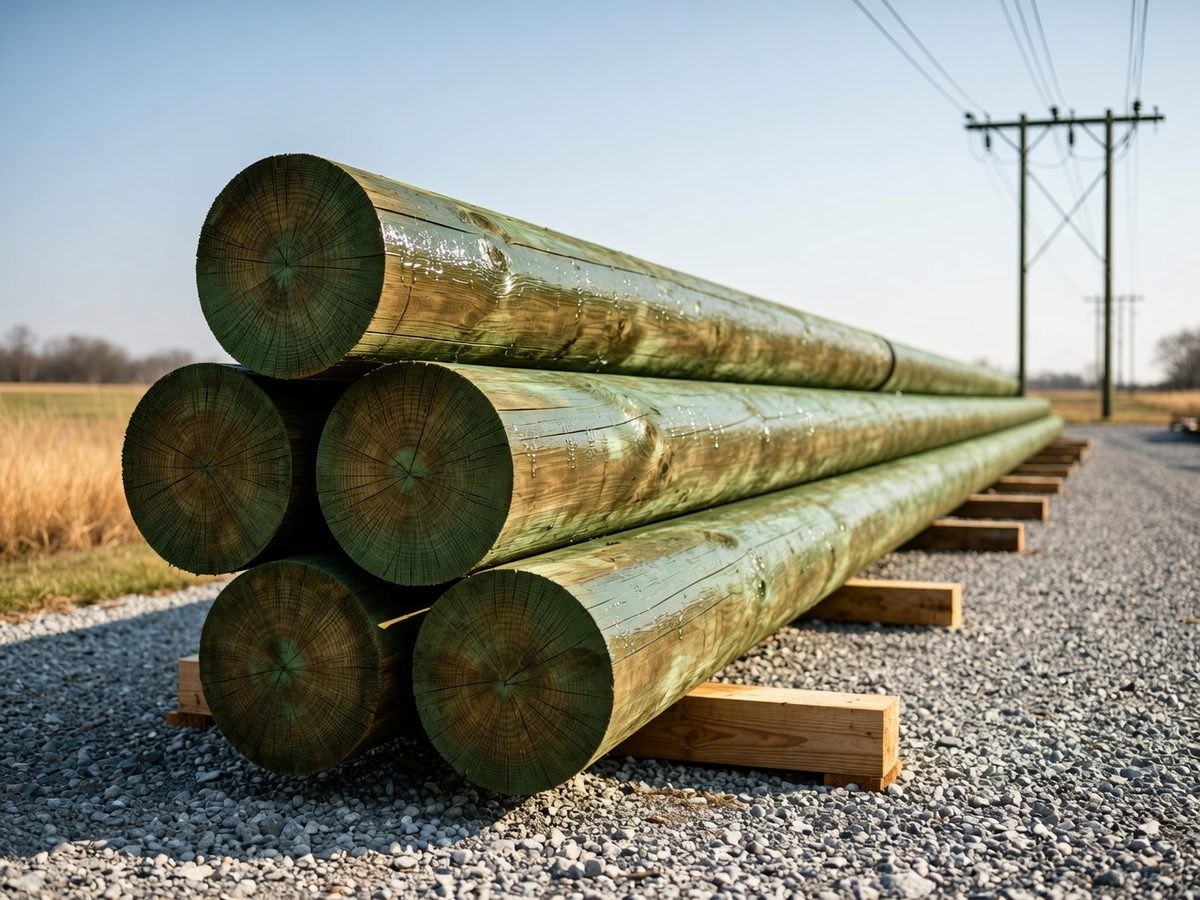
Utility poles

Utility poles

Telecom and power distribution poles, 9 m and 12 m, 8 m to order; shorter poles for low-voltage lines, street lighting and fibre drops

Our core product, pressure-treated to the retention the line requires
Crossarms, stays and posts

Crossarms, stays and posts

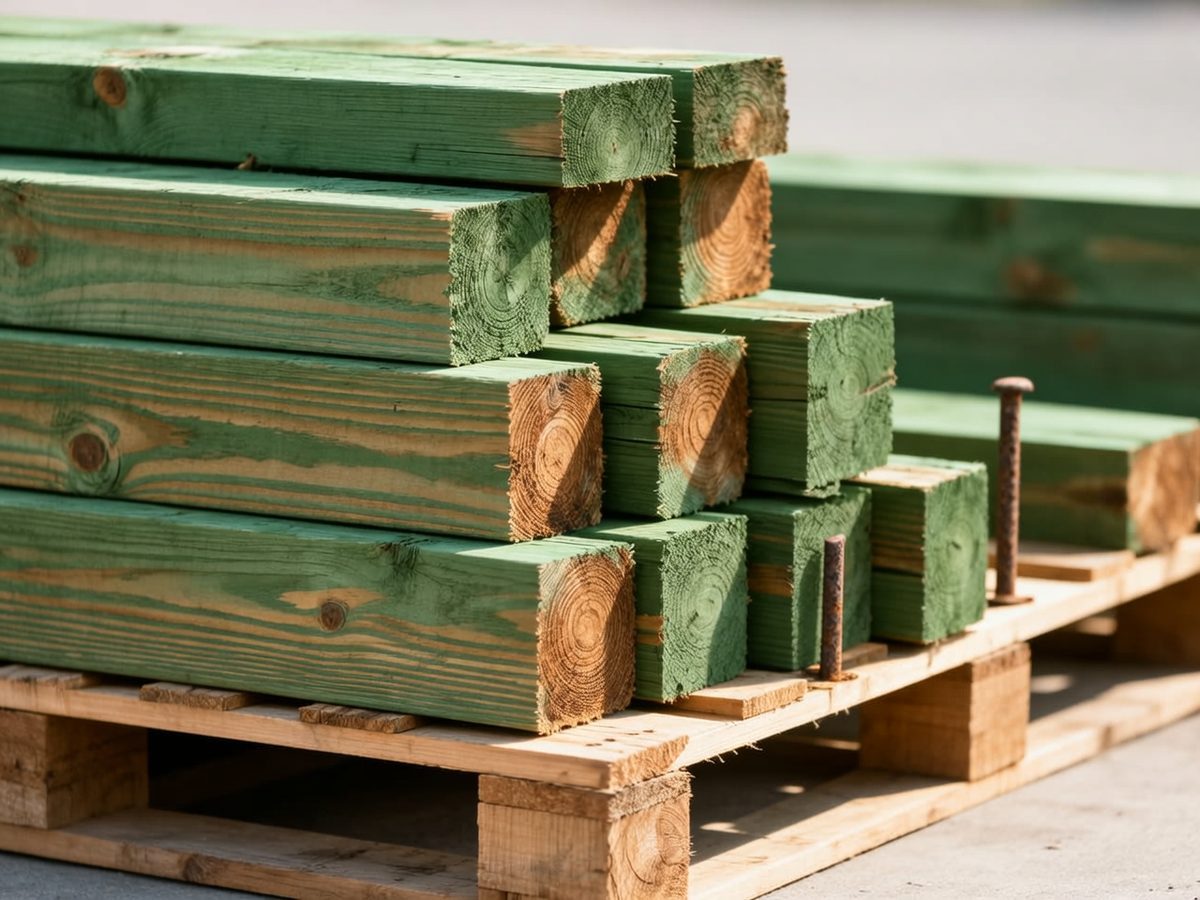
Crossarms, stay stakes, guardrail posts, sign posts, mooring posts

Cut from the same pole stock and treated in the same cycle
Farm and fencing timber

Farm and fencing timber

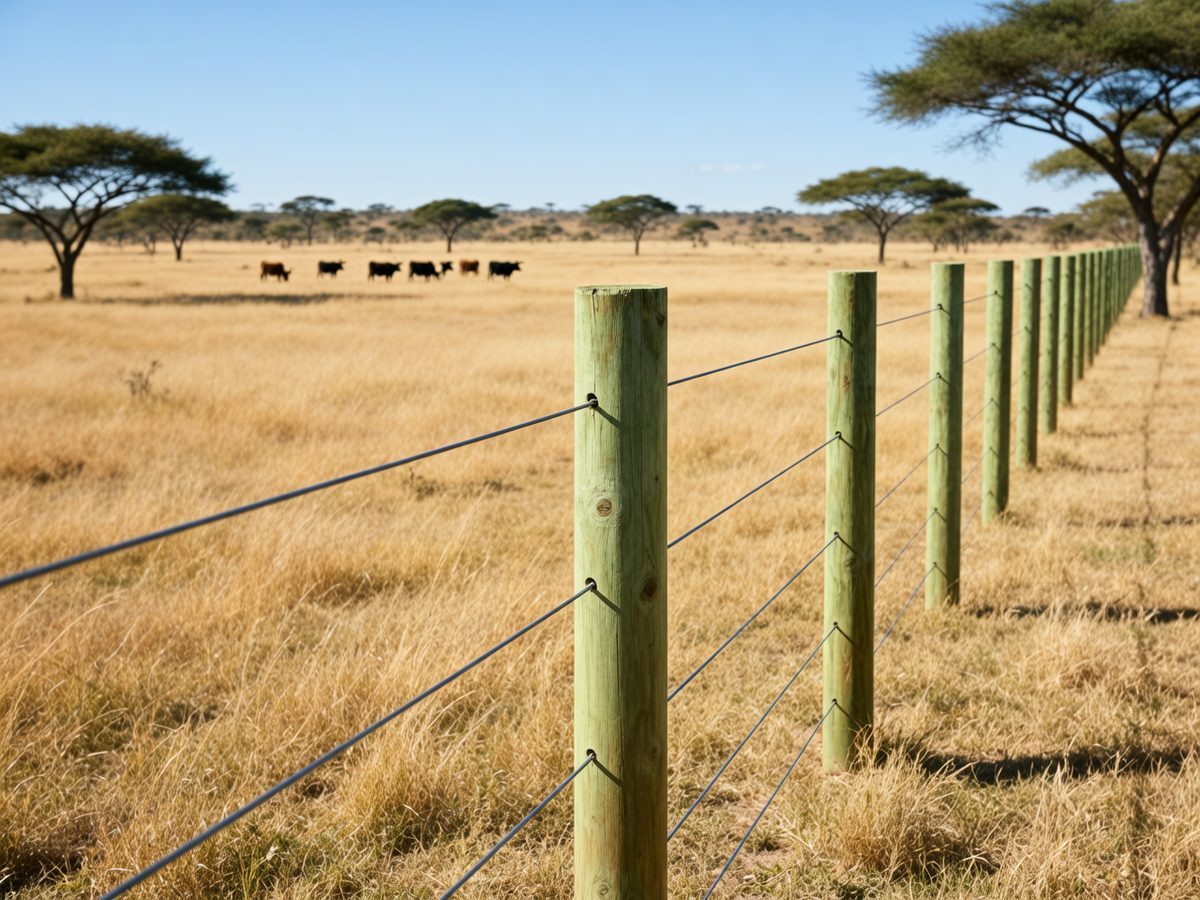
Fence posts, vineyard and orchard stakes, livestock enclosure posts, greenhouse frames

Round and half-round posts for ground contact
Construction timber

Construction timber

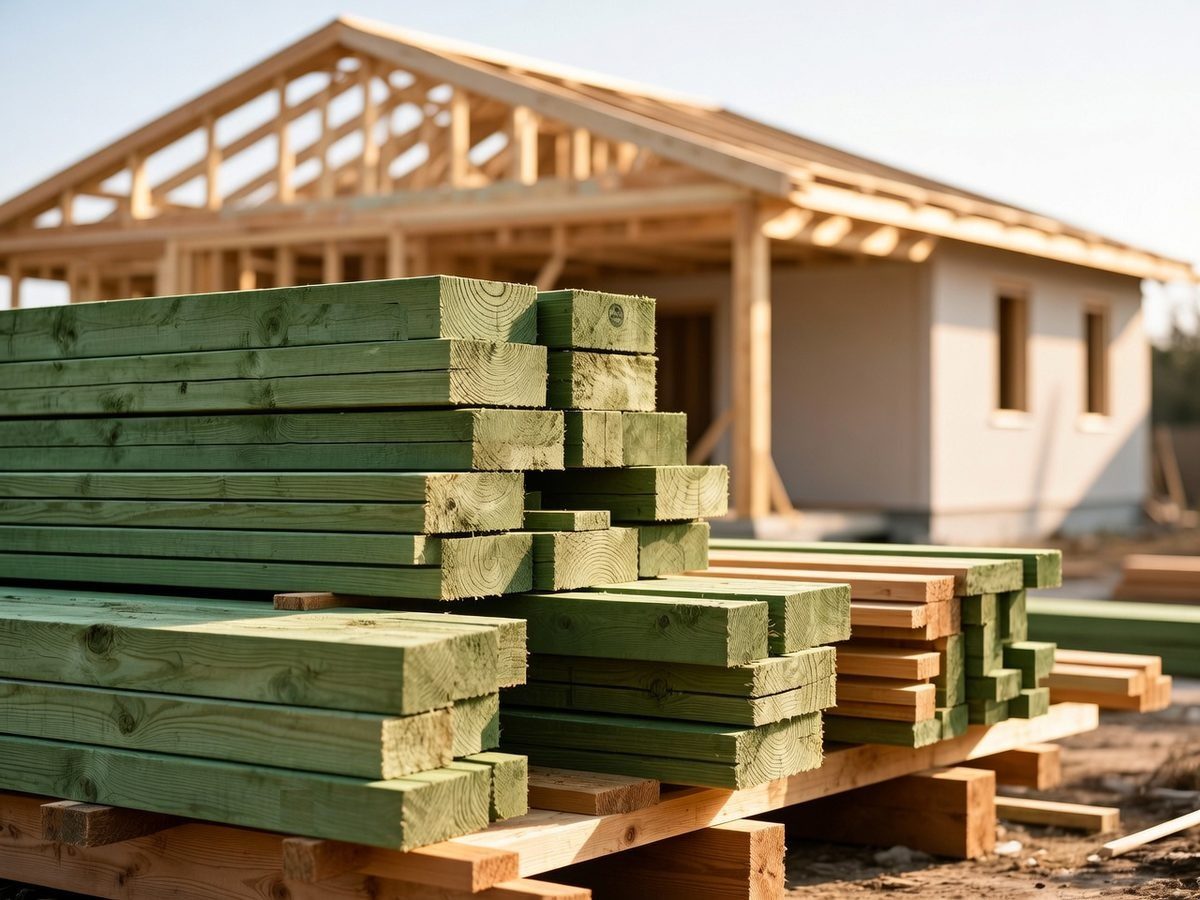
Roof trusses, purlins, battens, ground beams and sills, formwork timber

Water-based ACQ treatment, suitable for residential and public buildings
Outdoor and landscaping

Outdoor and landscaping

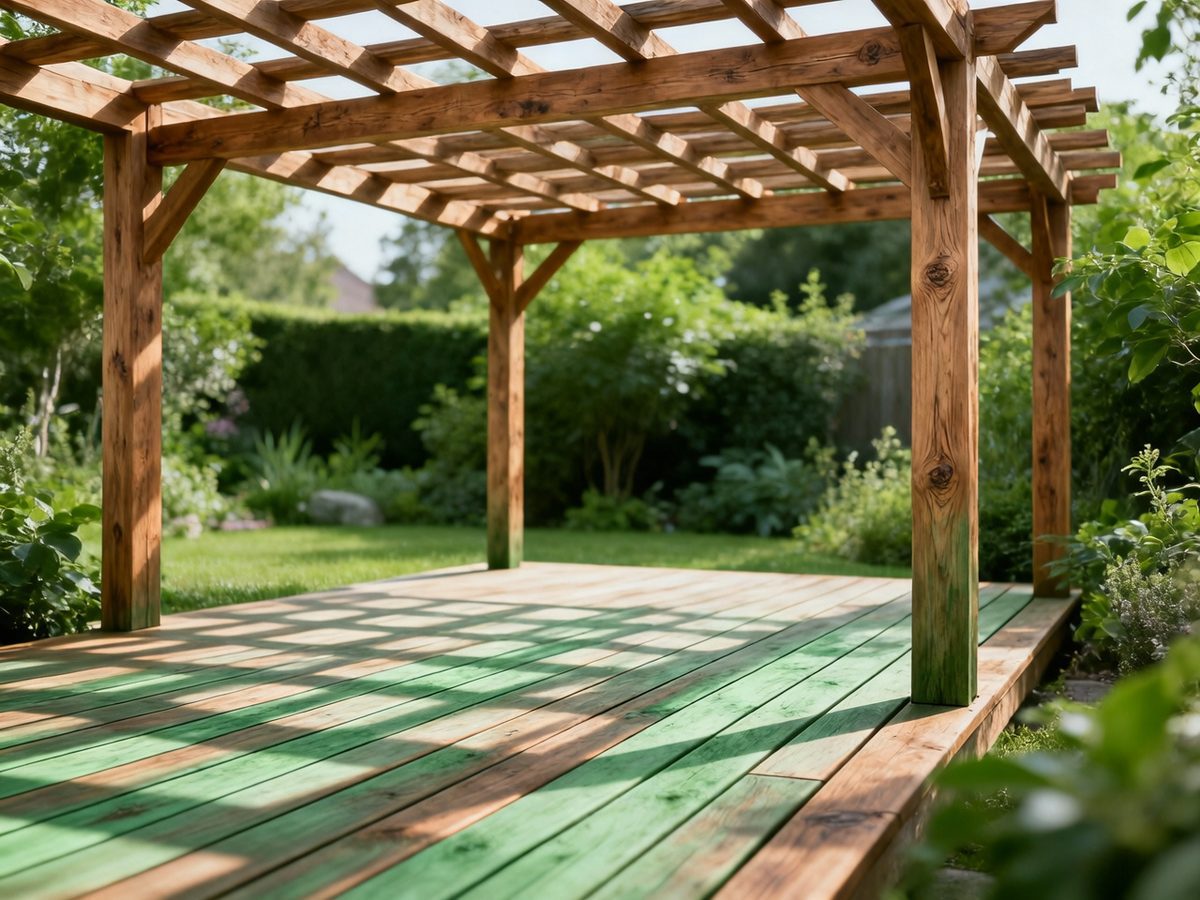
Decking, pergola posts, boardwalks, playground timber, garden timber

Treated timber that stays in service outdoors without paint
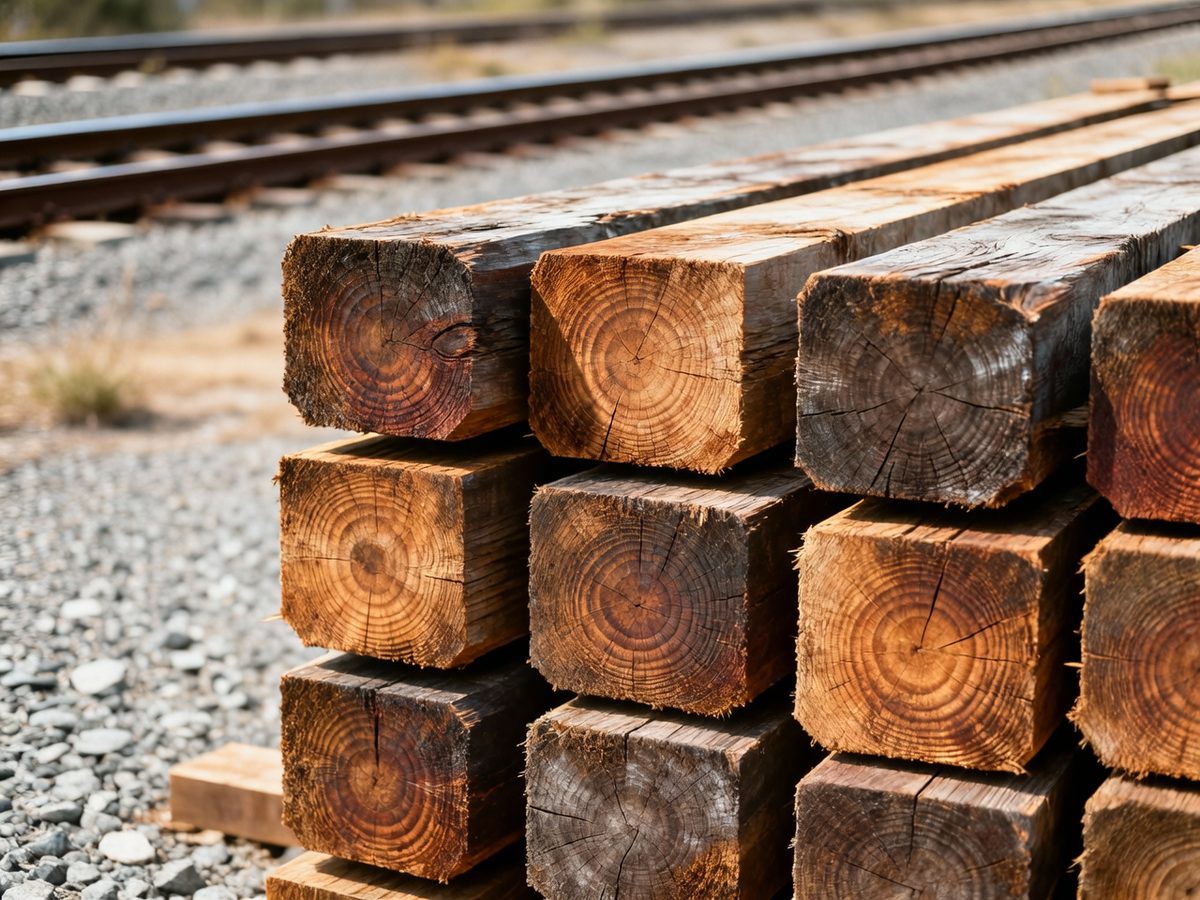
Sleepers and mine timber

Sleepers and mine timber

Railway sleepers, mine props

Water-based treatment schedule set for each timber species
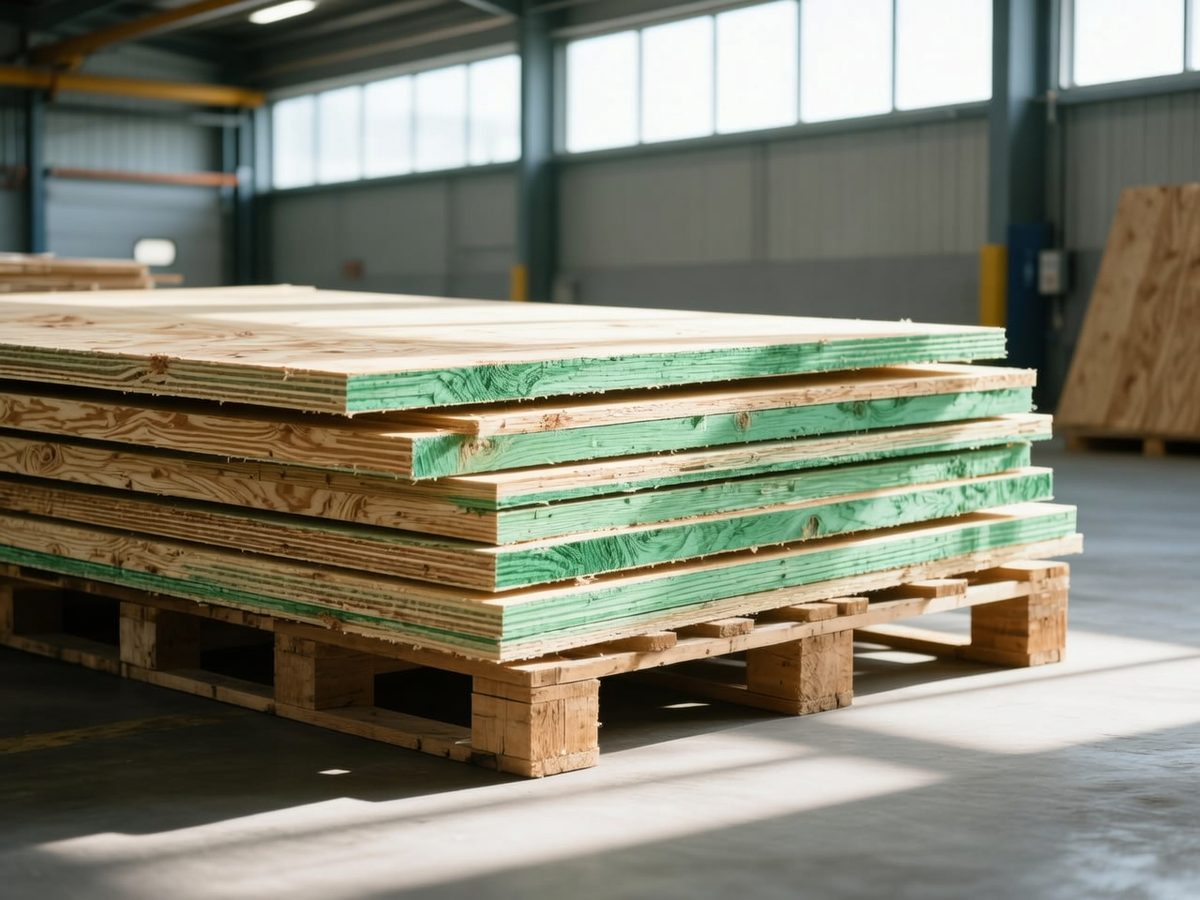
Plywood and LVL

Plywood and LVL

Pressure treatment of plywood and laminated veneer lumber

For formwork and exterior cladding
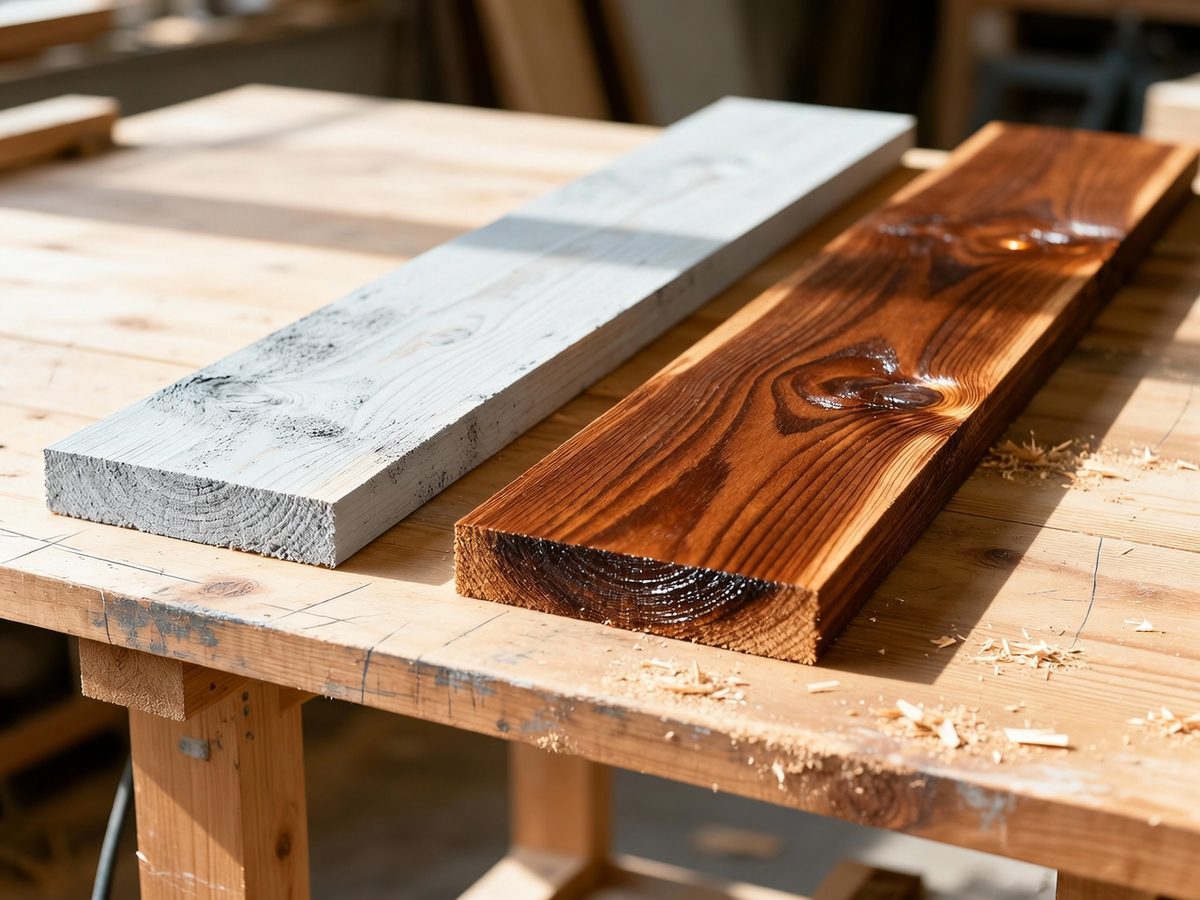
Fire-retardant and colour impregnation

Fire-retardant and colour impregnation

Water-based fire-retardant treatment, colour impregnation

Same vacuum-pressure cycle, different solution
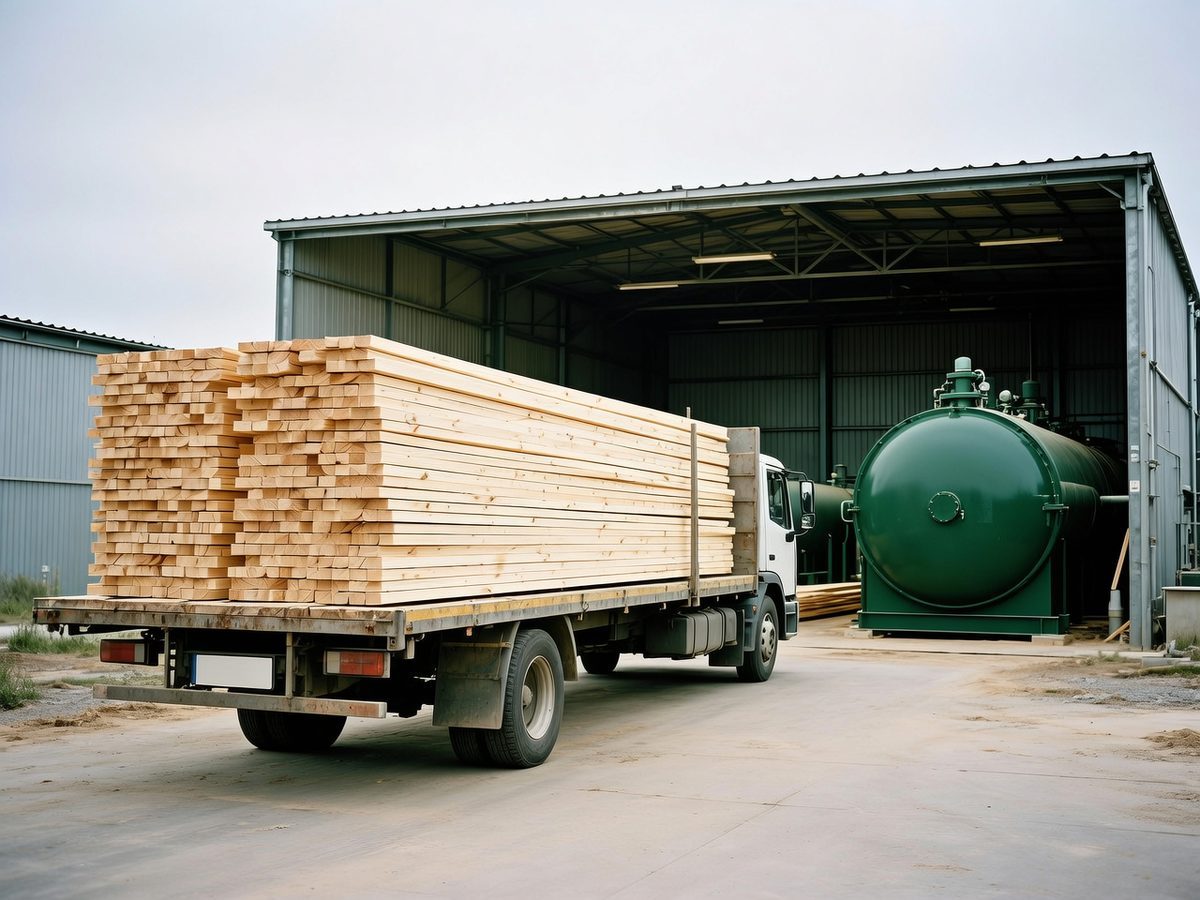
Treatment of customer timber

Treatment of customer timber

Pressure treatment of timber supplied by the customer

Bring your timber, we treat it to specification

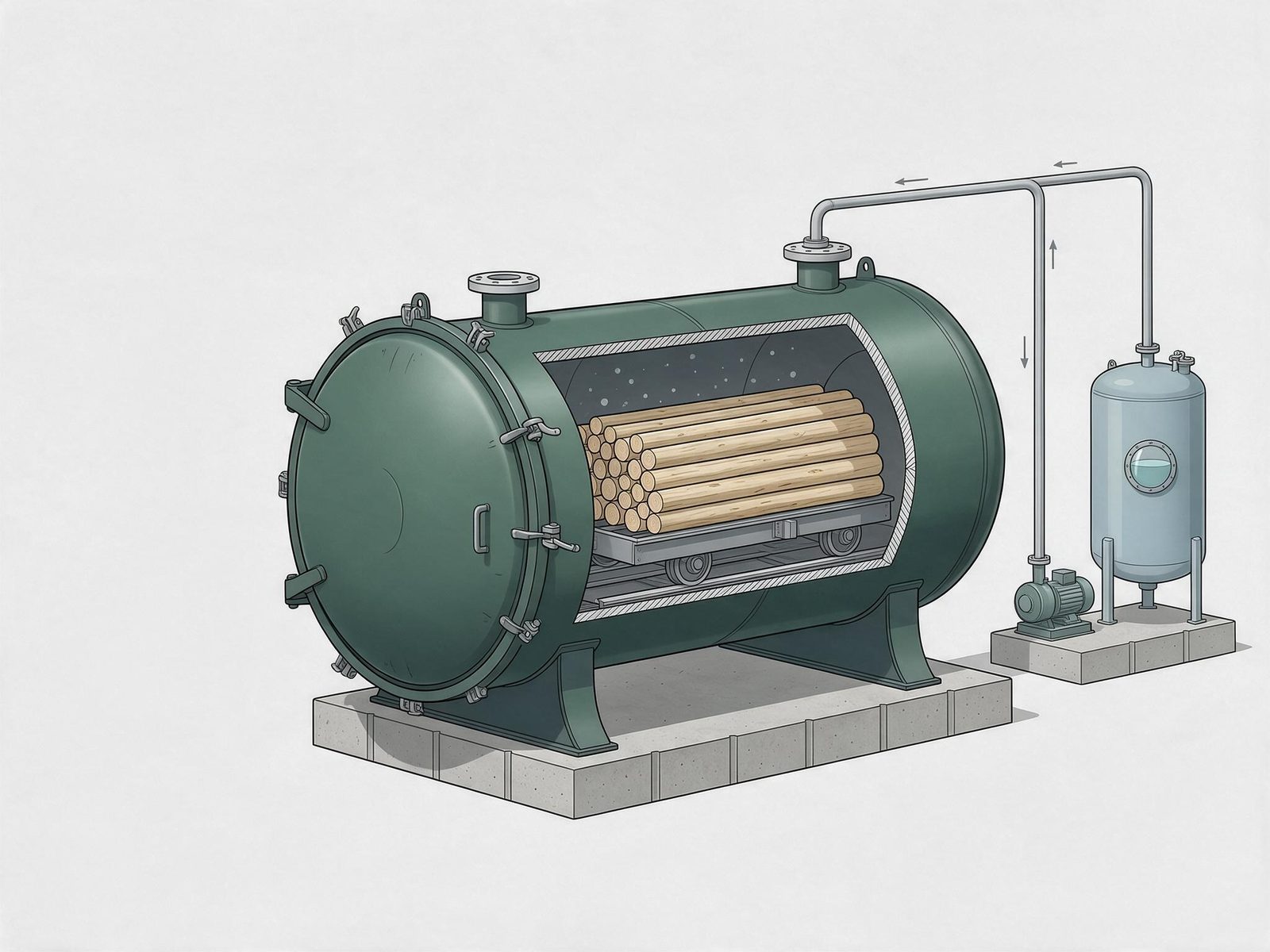
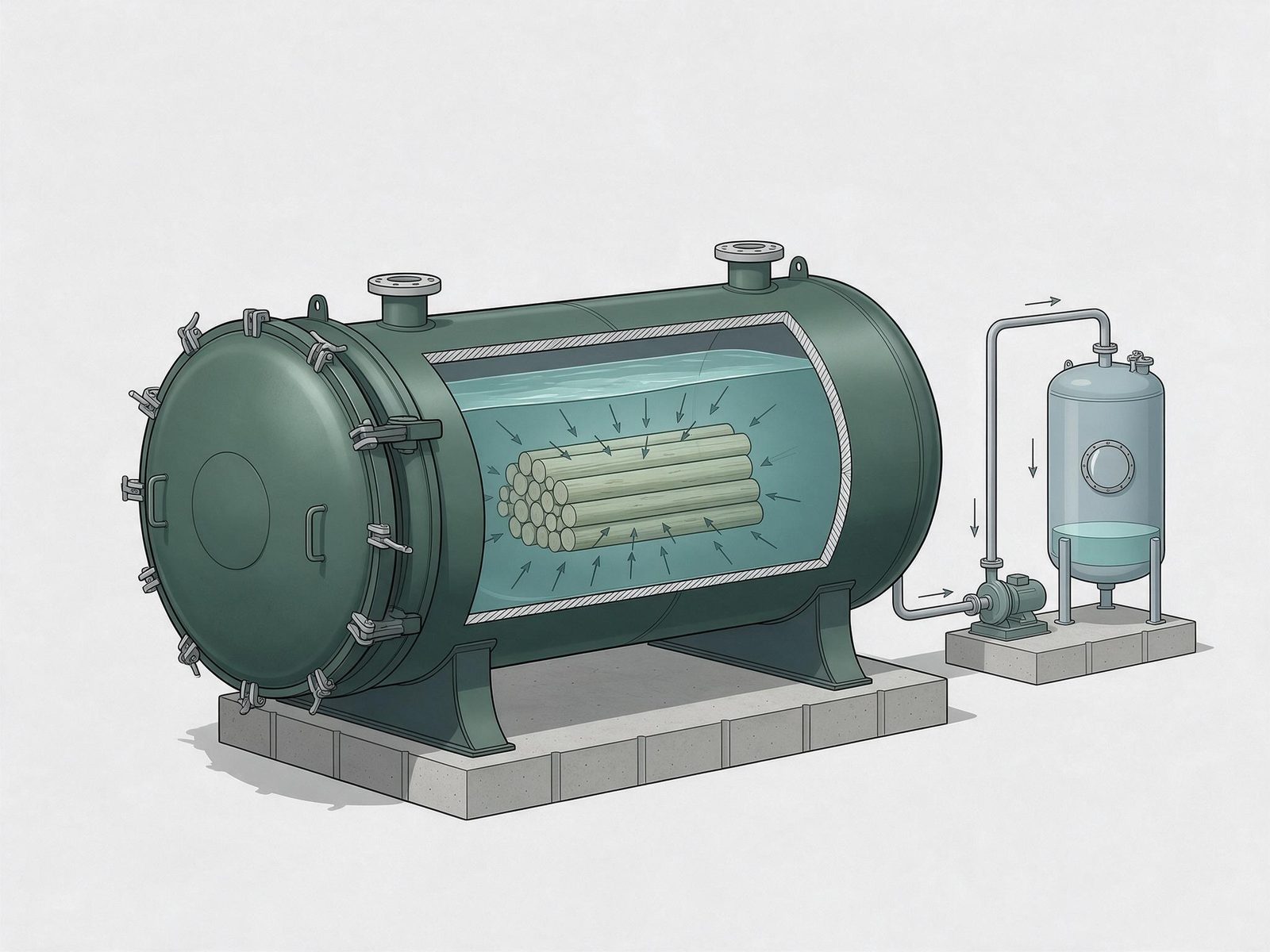
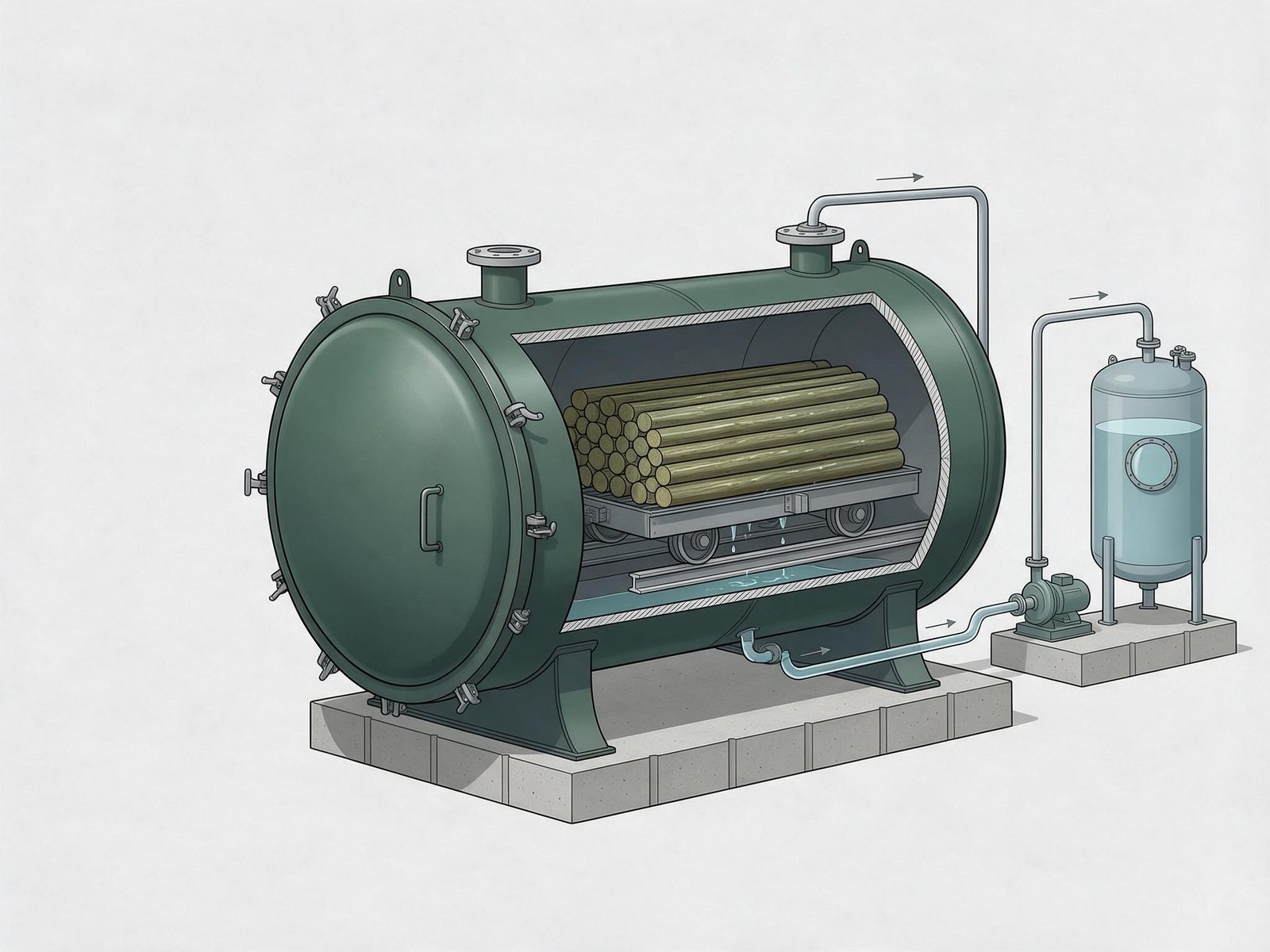
Vacuum-pressure treatment

Full-cell treatment in an autoclave using water-based ACQ preservatives.
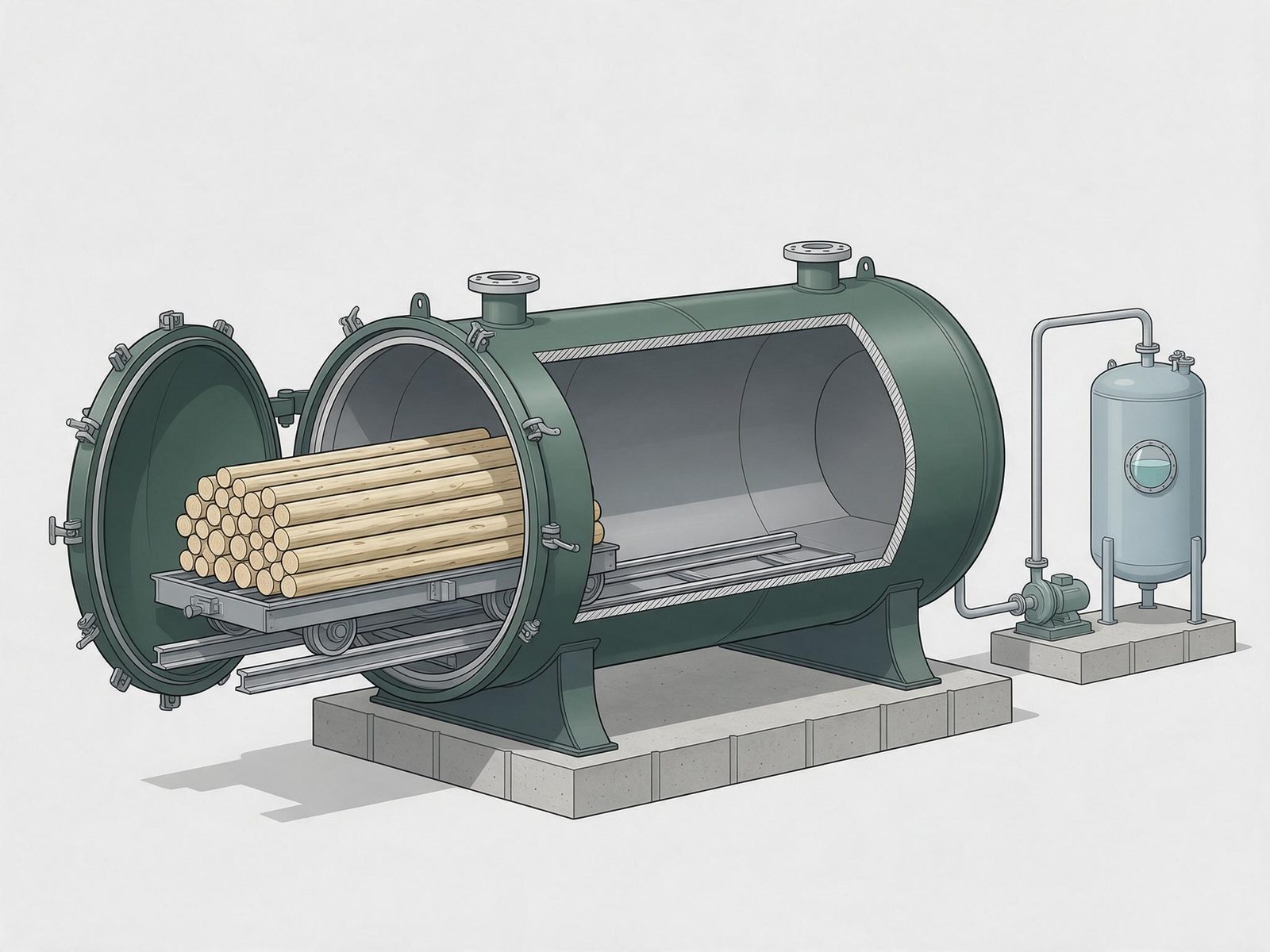
  1. Load the autoclaveLoad the autoclave
  2. Initial vacuumInitial vacuum
  3. Pressure impregnationPressure impregnation
  4. Final vacuum / drainingFinal vacuum / draining
Treatment equipment
Autoclave: internal diameter × length1.8 m × 12 m
Working pressure−0.098 / +1.58 MPa
PreservativesWater-based ACQ
Solution tanks3 × 10,000 L
Solution mixing ratio1:20

Why ACQ

ACQ (alkaline copper quaternary) is a water-borne wood preservative whose active ingredients are copper and a quaternary ammonium compound. It contains no arsenic, no chromium and no persistent organic pollutants. It is effective against decay fungi, wood-boring insects and termites, and is suitable for poles in contact with soil and water.

  • No arsenic, no chromium: ACQ protects wood with copper and a quaternary ammonium compound.
  • Lower toxicity in handling, installation and disposal than CCA. ACQ is the preservative adopted in markets where CCA has been restricted for residential and public-contact use.
  • Same service class as CCA: rated for ground contact (hazard class H4 and H5) against decay, termites and wood-boring insects.
  • Water-based treatment leaves a dry, clean, odour-free surface that can be handled, climbed and painted.
  • Hardware: use hot-dip galvanised or stainless-steel fasteners and fittings with ACQ-treated wood.
  • Fixation: once pressed into the wood, the copper binds to the cellulose and hemicellulose by ion exchange and forms insoluble compounds, so it is not washed out by rain or soil moisture.
  • Treated wood takes a light brown colour. Strength and electrical insulation are not reduced, and the surface can still be painted.
  • Transport: the preservative is classified as non-dangerous goods under the IMDG Code by a CNAS-accredited laboratory.

Production and quality control

  1. Log intake: species, length and diameter class are checked against the order; logs with rot, insect damage or excessive sweep are rejected.
  2. Debarking and trimming: bark and cambium are removed, ends are cut square and both ends are nail-plated.
  3. Seasoning: kiln-dried to a moisture content below 14% before treatment, checked with a moisture meter.
  4. Pre-treatment inspection: straightness, taper, checks, knots and dimensions are verified against SANS 754 and the order; non-conforming poles are set aside.
  5. ACQ vacuum-pressure treatment: full-cell cycle with vacuum, pressure, time and solution concentration recorded for each charge.
  6. Post-treatment inspection: penetration is checked on every pole by increment core and retention is verified per charge by analysis; poles with insufficient penetration are re-treated.
  7. Marking and documentation: an aluminium identification plate on each pole and a treatment certificate with each delivery.
  8. Fixation, storage and dispatch: treated poles are held until the preservative has fixed, then stacked off the ground under cover until dispatch.

Plant & capacity

Our own plant in Luanda, Angola.

Daily capacity · 1 shift, 2 treatment cycles
Pole lengthApproximate poles per day
8 m70
9 m52
12 m38

Epoxy protective flooring, collection channels and a collection pit provide plant-wide containment and solution recovery.

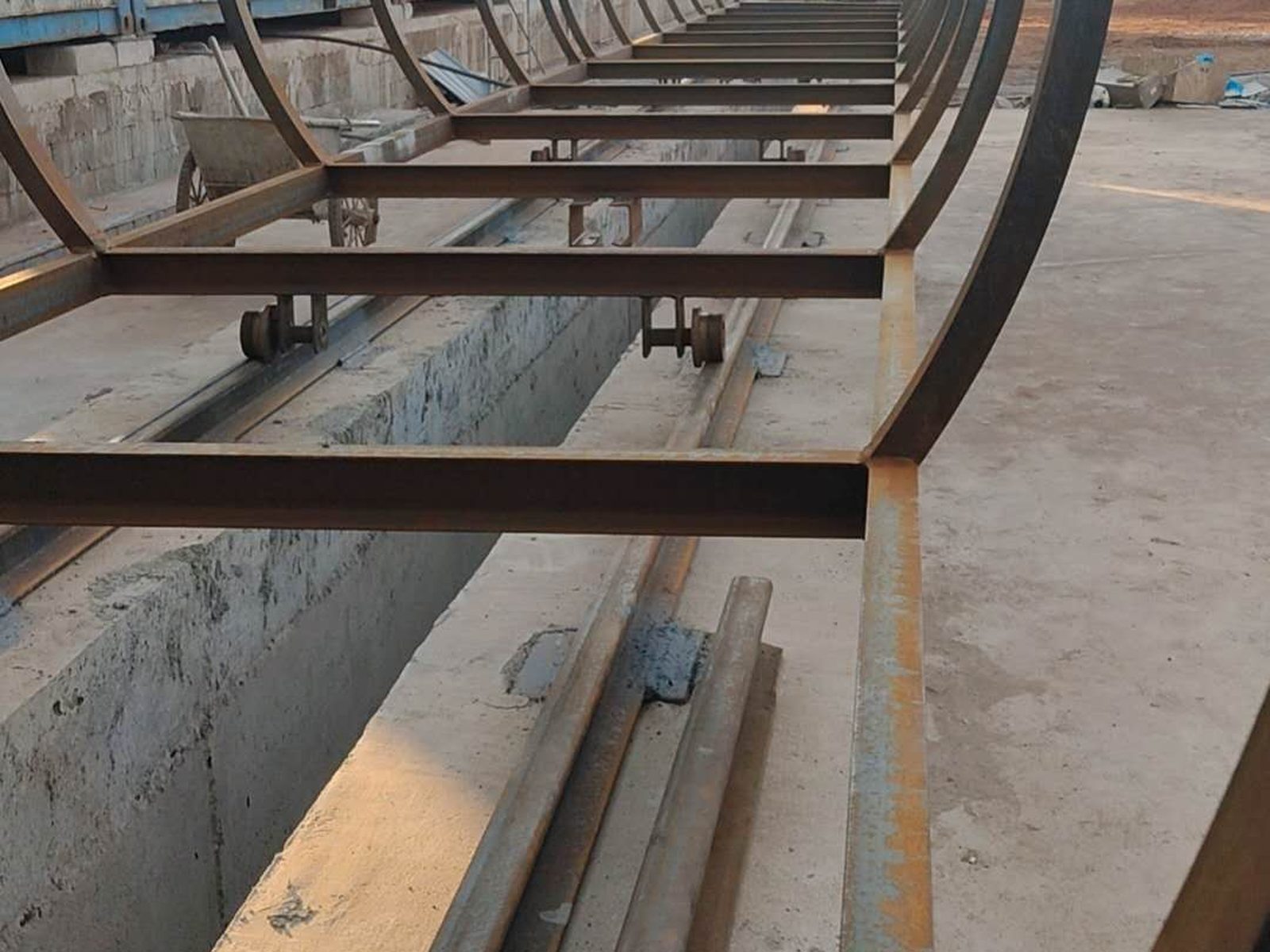
Bundles enter and leave the autoclave on rail trolleys. Loading uses a loader and winch traction.
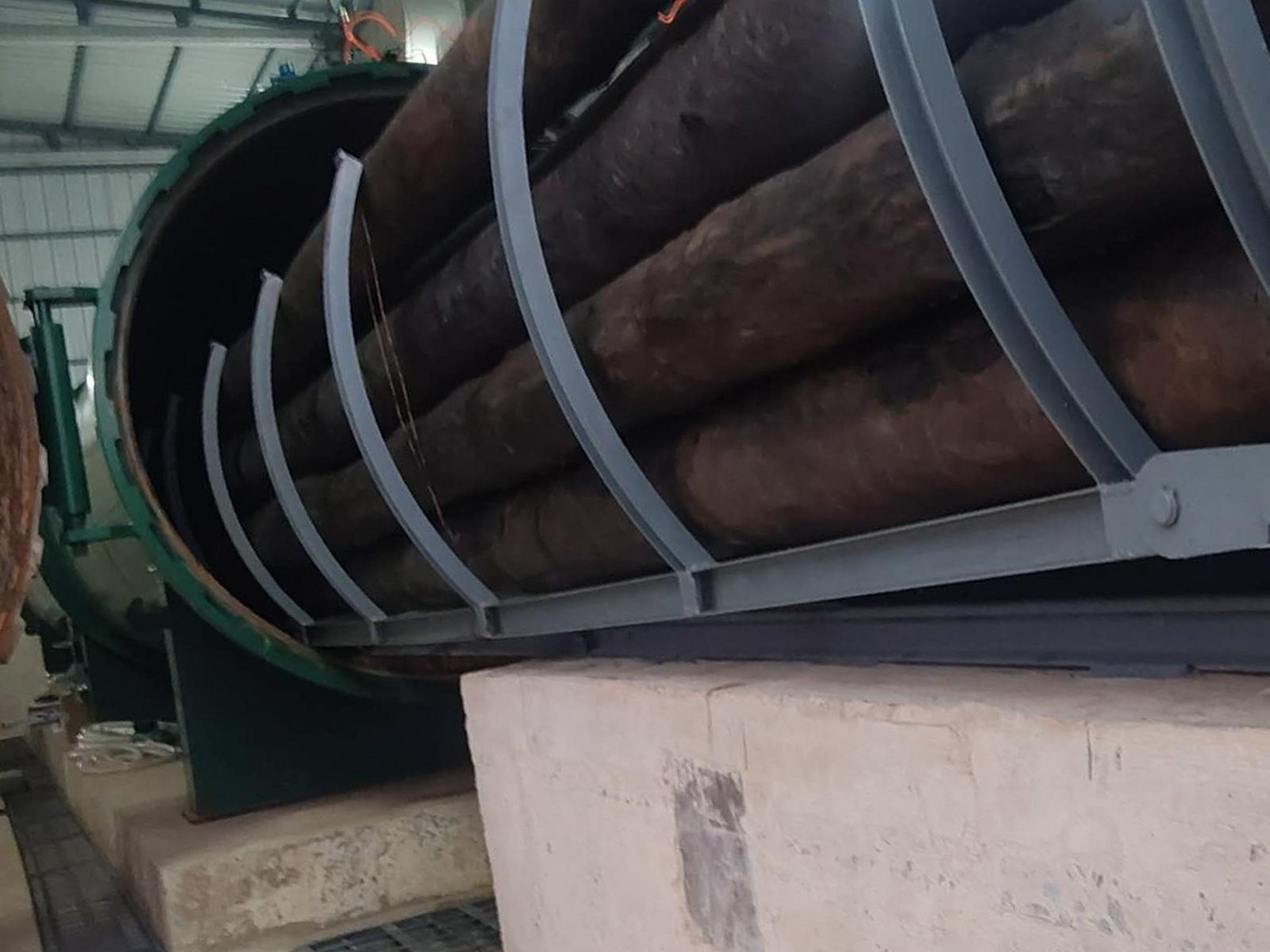
Bundled poles on the trolley at the mouth of the treatment autoclave

Quality & environment

  • Water-based ACQ preservatives.
  • Plant-wide containment with epoxy protective flooring, collection channels and a collection pit.
  • Treatment solution is recovered and recirculated in a closed system.

Contact

Email

info@bestpoles.com
liang@bestpoles.com

Telephone

+244 928 622 777
+244 922 222 294

Location

Luanda, Angola

↑